

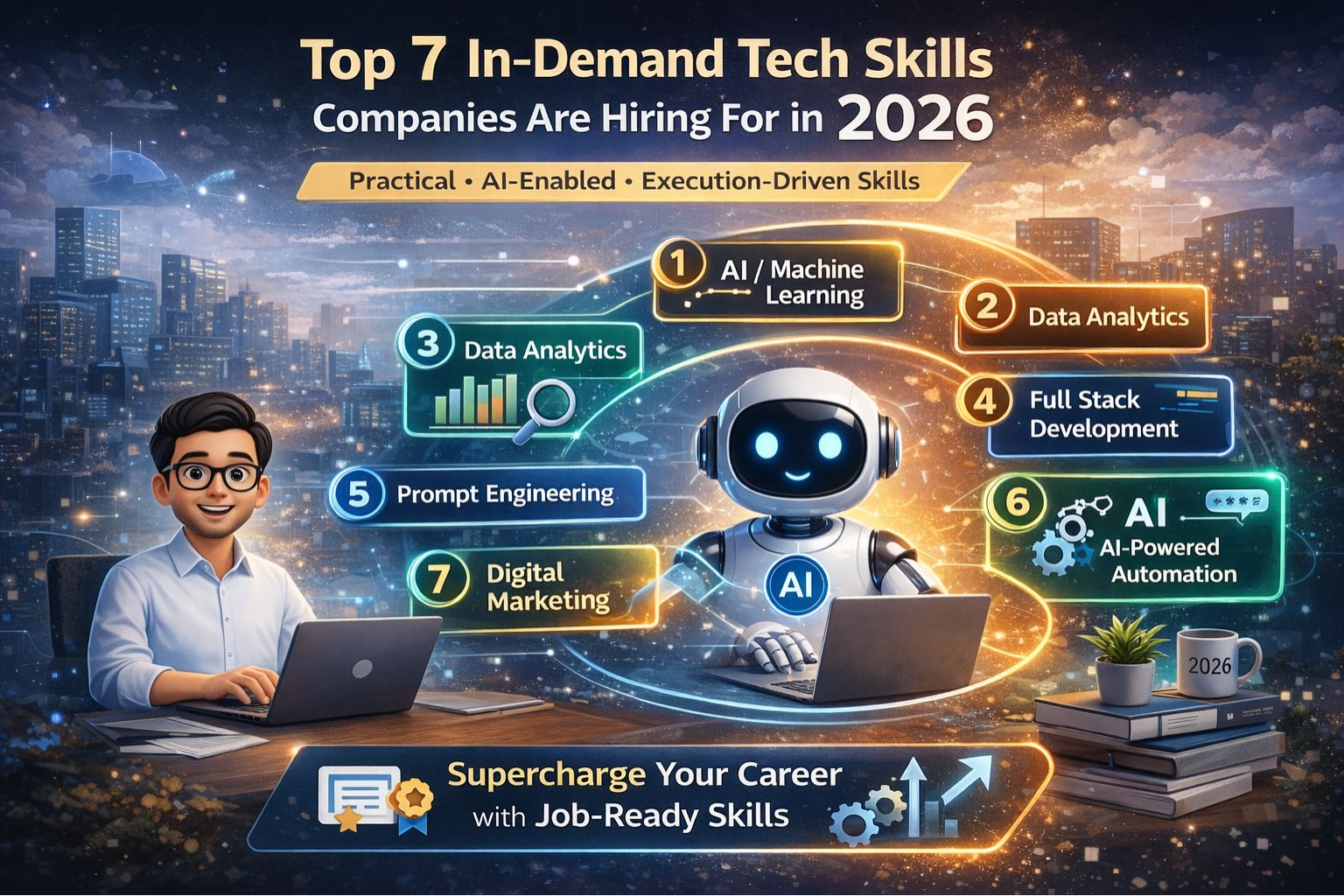
Technology hiring is changing fast. Companies are no longer looking for degrees - they are looking for skills that can solve real problems.
In 2026, the focus has shifted toward practical, AI-enabled, and execution-driven skills. Students who understand tools, build projects, and adapt quickly are getting more opportunities than those who only follow theory.
This guide will help you understand the most in-demand tech skills companies are actively hiring for - and how you can start learning them.
Why Skill Selection Matters More Than Ever
The job market is becoming skill-first.
Companies now evaluate:
- what you can build
- how you solve problems
- how fast you can adapt to tools
- whether you can work with AI
👉 This means choosing the right skill early can accelerate your career.
1. AI Tools & Automation (Fastest Growing Skill)
AI tools are no longer optional. They are becoming part of everyday work.
What companies expect:
- ability to use tools like ChatGPT, Gemini
- content generation and automation workflows
- productivity improvement using AI
Use cases:
- writing content faster
- generating code
- research and analysis
- building automation workflows
👉 This is the fastest entry skill for beginners.
2. Web Development (Still the Strongest Foundation Skill)
Every business needs a digital presence. Web development continues to be one of the most reliable skills.
What companies expect:
- ability to build responsive websites
- understanding of frontend basics
- deployment knowledge
Tech stack:
- HTML, CSS, JavaScript
- basic frameworks
👉 Strong for jobs, freelancing, and portfolio building.
3. Data Analytics (High Demand + Business Impact)
Data is driving decisions in every company.
What companies expect:
- ability to analyze data
- create dashboards
- generate insights
Tools:
- Excel
- SQL
- Power BI
👉 One of the most job-oriented skills in India.
4. Prompt Engineering (AI Control Skill)
Using AI is one thing. Controlling AI effectively is another.
What companies expect:
- writing structured prompts
- building reusable prompt systems
- optimizing outputs
Use cases:
- SEO content generation
- business workflows
- automation
👉 This is becoming a new-age digital skill.
5. Digital Marketing (Growth + Monetization Skill)
Companies need visibility and growth.
What companies expect:
- SEO understanding
- content strategy
- performance marketing basics
Use cases:
- lead generation
- brand building
- product growth
👉 Strong for freelancing and business.
6. Machine Learning (Advanced Career Skill)
Machine learning is a high-value skill but requires structured learning.
What companies expect:
- understanding of models
- ability to work with datasets
- basic prediction systems
Use cases:
- recommendation systems
- prediction models
- automation
👉 Strong career differentiator.
7. Career Portfolio & Personal Branding (Hidden but Critical Skill)
Most students ignore this, but companies don’t.
What companies expect:
- GitHub projects
- portfolio website
- structured resume
- optimized LinkedIn profile
👉 Skills without presentation = no opportunities.
How These Skills Work Together (Important Insight)
These skills are not separate. They form a system:

👉 Students who combine skills get better results than those who learn randomly.
How to Start (Simple Action Plan)
If you are confused, follow this:
Step 1: Start with AI Tools + one core skill
Step 2: Build small projects
Step 3: Create portfolio
Step 4: Apply for internships or freelance work
Common Mistakes to Avoid
- learning too many skills at once
- focusing only on theory
- ignoring projects
- not building a portfolio
- waiting too long before applying
Final Thoughts
The future of tech careers is not about knowing everything. It is about knowing the right things and applying them.
Choose one skill, build real projects, and move step-by-step.
That is how real careers are built in today’s market.